
WEIGHT LOSS & FITNESS BLOG
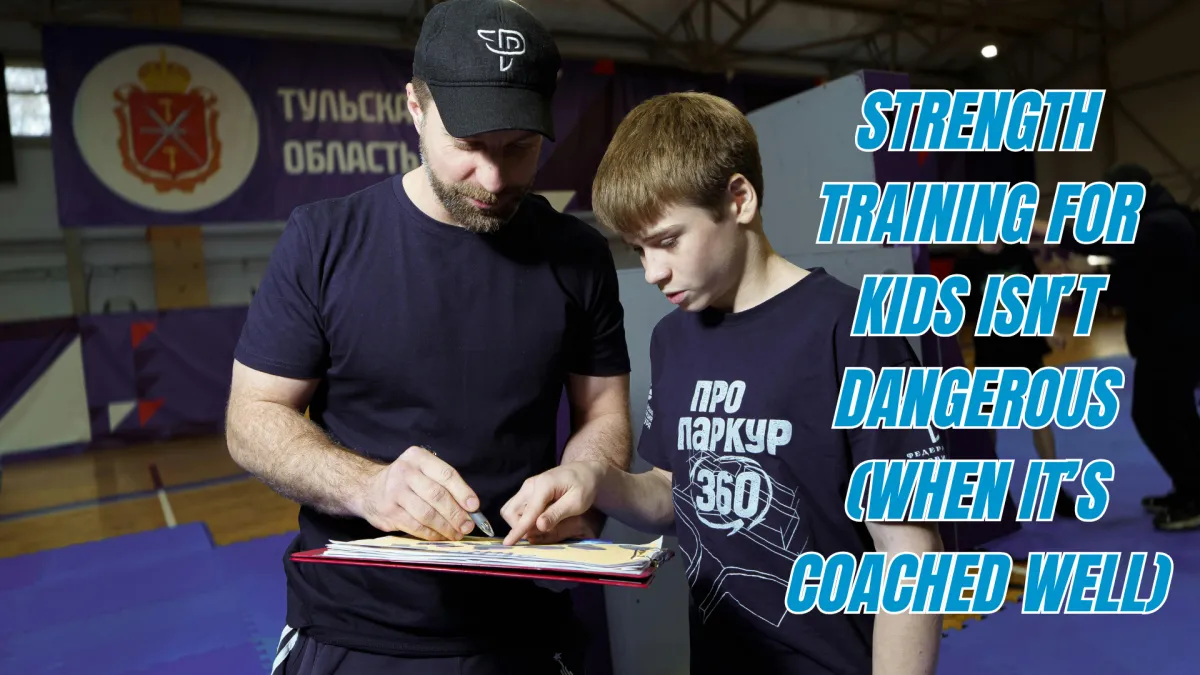
Strength Training for Kids Isn’t Dangerous (When It’s Coached Well)
Parents usually have the same two worries when they hear “strength training for kids.”
“Is this safe?”
“Will it stunt their growth?”
Both are fair questions.
But the real answer is simple:
Well-coached strength training is one of the safest and most useful things a young athlete can do.
Problems happen when kids are unsupervised, rushed, or doing the wrong stuff for their age and skill level.
First: “strength training” doesn’t mean maxing out
Most people picture a teenager loading a barbell and trying to impress their friends.
That’s not youth strength training.
Good youth strength training looks like:
learning how to squat, hinge, push, pull, brace, land, and decelerate
light-to-moderate loads, controlled reps
gradual progression
coaches who actually teach the movement
What the evidence says about safety (and why supervision matters)
One of the most important points from pediatric sports medicine guidance is this:
Properly supervised youth resistance training has a low injury rate, and many of the reported problems come from lack of supervision, poor technique, or inappropriate training environments.
Translation:
The risk isn’t “lifting.”
The risk is poor coaching and poor progression.
Does lifting stunt growth?
This fear is common, and it’s understandable.
But “growth plate injury” is not something that automatically happens because a kid touches a weight.
The more realistic view is:
Kids get injured in sports from a lot of things: collisions, falls, chaotic cutting/landing, overuse, fatigue
Strength training—when taught and progressed appropriately—is used specifically to build resilience and movement skill
Pediatric guidance supports resistance training as appropriate for children and adolescents when it’s technique-driven and supervised.
What kids actually get from strength training
This isn’t just “so they can lift more.”
Strength training helps kids:
build strength foundations (which supports speed, jumping, and change of direction)
improve coordination and body control
reduce “floppy” movement under fatigue
develop confidence (competence creates confidence)
And the big coaching win:
A kid who can brace, squat, hinge, and land well tends to handle sport practice demands better.
What “safe” looks like in real life
Here’s the checklist I use:
Green flags
Coach teaches movement first, load second
Progression is earned, not rushed
Reps are controlled (no ego lifting)
Warm-ups include landing/deceleration basics
Red flags
Regular maxing out
“Form doesn’t matter” culture
No plan (just random workouts)
Little coaching/correction
Bottom line
Youth strength training isn’t about turning kids into powerlifters.
It’s about building:
movement skill
strength foundations
resilience
confidence
If you want your child to get stronger, move better, and build athleticism the right way, we can help.
Want details on our Youth Training program? Check it out here: [YOUTH PROGRAM LINK].
References (MLA)
Stricker, Paul R., Avery D. Faigenbaum, and Teri M. McCambridge. “Resistance Training for Children and Adolescents.” Pediatrics, vol. 145, no. 6, 2020, e20201011. American Academy of Pediatrics, doi:10.1542/peds.2020-1011.
Faigenbaum, Avery D., et al. “Youth Resistance Training: Updated Position Statement Paper From the National Strength and Conditioning Association.” Journal of Strength and Conditioning Research, vol. 23, suppl. 5, 2009, pp. S60–S79, doi:10.1519/JSC.0b013e31819df407.

Are you Ready to become
sTRONG - FIT - cONFIDENT?
Click the Button To Start Your Journey Today!!


