WEIGHT LOSS & FITNESS BLOG
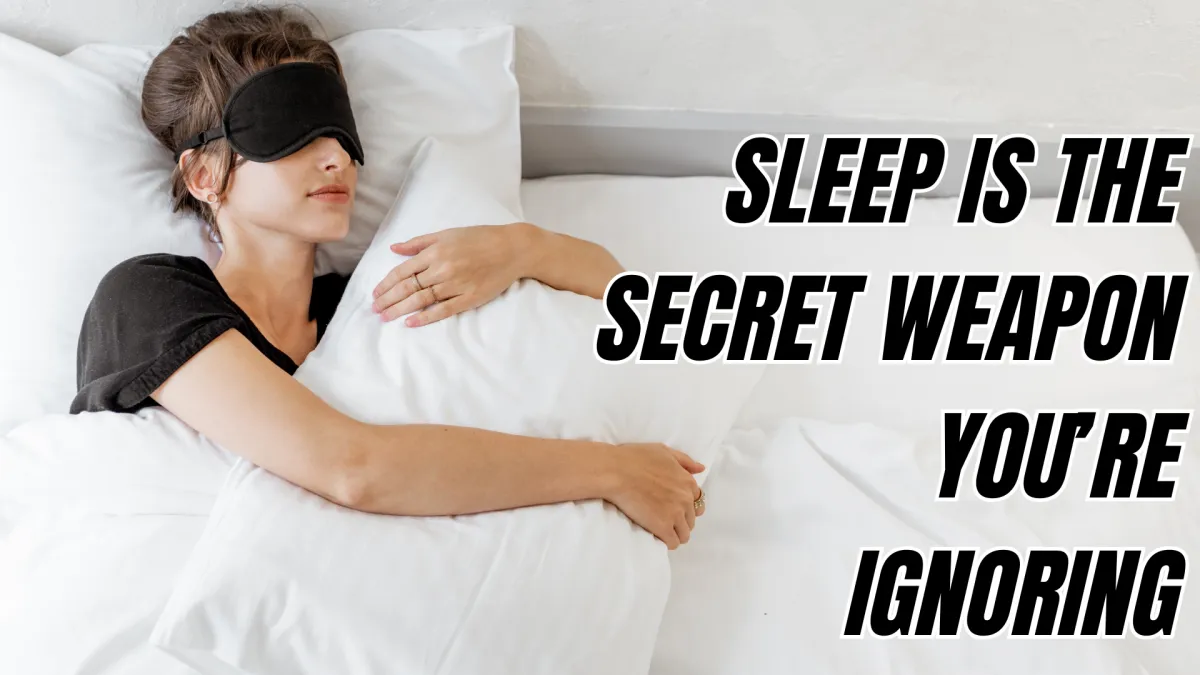
Sleep Is the Secret Weapon You’re Ignoring
If your results feel stuck, I’m going to ask you something most people don’t want to look at.
How’s your sleep?
Because you can train hard and eat “pretty good”… and still feel like garbage if your sleep is wrecked.
This isn’t about being soft. It’s about being honest.
Sleep is a consistency problem before it’s a “health” problem
When your sleep is off, a few things usually happen fast:
Your workouts feel harder than they should
Your cravings get louder
Your patience gets shorter
You start skipping the stuff that actually works
So if the March goal is “don’t disappear,” sleep is one of the highest-leverage places to clean up.
What the research actually supports
Two big takeaways show up again and again in the research:
Regular exercise tends to improve subjective sleep quality (how well you feel like you slept).
Exercise training can also improve common sleep disturbance measures (sleep quality, insomnia symptoms, daytime sleepiness) across a wide range of studies.
This isn’t “exercise fixes everything.”
It’s more like:
When people move consistently, sleep tends to improve enough that life gets easier to manage.
And when life gets easier to manage… consistency is easier.
The coach approach: better, not perfect
Most people don’t need a fancy routine.
They need two basics done consistently:
1) Keep the same wake-up time most days
That’s the anchor. Even if bedtime shifts a little, a consistent wake time helps keep your rhythm from drifting.
2) Build a 20–30 minute wind-down buffer
Not a spa night. Just a buffer that tells your brain “we’re done for today.”
Pick 2–3 of these:
Lights lower
Screens off or dimmed
Hot shower
Stretching + slow breathing
Paper book
Write the “to-do” list for tomorrow so it stops looping in your head
Common sleep sabotages I see (and what to do instead)
Caffeine too late
If you’re dragging at 3pm and grabbing caffeine to survive… you’re probably borrowing energy from your night.
Try:
caffeine earlier
a 10-minute walk
more water + real lunch
Alcohol as a “sleep aid”
It can knock you out, but a lot of people wake up feeling worse. Pay attention to your own pattern.
Training too hard, too late
Some people sleep fine after an evening workout. Others don’t.
If you’re wired at night, test this:
hard sessions earlier
easier sessions later
5–10 minutes of breathing at night
The practical plan for the rest of March
For the next 7 days:
Track your sleep in 10 seconds (hours slept + “good/ok/bad”)
Keep a consistent wake time
Do a 20-minute wind-down buffer at least 4 nights
That’s it.
Then we adjust like adults based on what actually happened.
If you want help building a plan that matches your real life (schedule, stress, goals), fill out the form on this page and we’ll reach out to set up your No Sweat Intro.
References (MLA)
Amiri, Sohrab, et al. “Effect of Exercise Training on Improving Sleep Disturbances: A Systematic Review and Meta-Analysis of Randomized Control Trials.” Sleep Medicine, vol. 84, 2021, pp. 205–218. doi: 10.1016/j.sleep.2021.05.013.
Xie, Yi, et al. “Effects of Exercise on Sleep Quality and Insomnia in Adults: A Systematic Review and Meta-Analysis of Randomized Controlled Trials.” Frontiers in Psychiatry, vol. 12, 2021, article 664499. doi: 10.3389/fpsyt.2021.664499.