WEIGHT LOSS & FITNESS BLOG
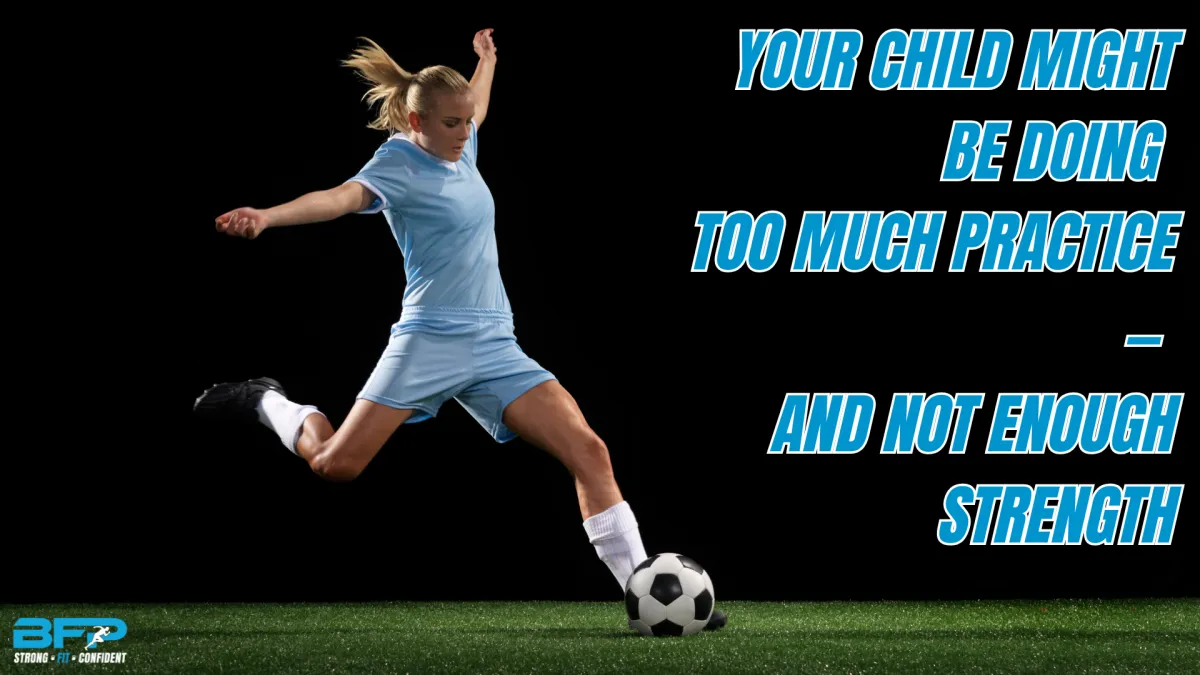
Your Child Might Be Doing Too Much Practice — And Not Enough Strength
If your child plays sports, they’re already sprinting, cutting, jumping, and running drills at practice. Especially if they are high school age.
So a very reasonable question parents ask is:
“Don’t they already get enough speed and agility work?”
That sounds logical.
But a study published in the Journal of Strength and Conditioning Research gives us a clearer answer — and it may surprise you.
Researchers studied 17–18-year-old elite European soccer players. These weren’t beginners. They were highly trained athletes practicing four to five times per week and competing at a serious level.
So this wasn’t a study on kids who needed “basic conditioning.” These were athletes already doing many things right.
The researchers wanted to know what type of additional training improved performance the most.
The Three Training Approaches Compared
All athletes continued their regular soccer practices. But three groups added different types of performance training twice per week over ten months.
The first group focused on plyometrics and sprint work. Their training included jumping drills, short sprints, bounding exercises, hurdle hops, and reactive agility movements. This is what most parents picture when they hear “speed training.”
The second group performed what the study defined as functional training. This meant bodyweight and band-based exercises. Think movements like push-ups, planks, single-leg balance drills, resistance band walks, and light circuit-style work.
The third group completed traditional, progressive strength training. Their program included structured resistance exercises such as squats, lunges, Romanian deadlifts, bench press variations, and hip-dominant lifts. The focus was gradual overload — increasing resistance over time while maintaining proper technique.
No ego lifting. No maxing out weekly. Just structured strength progression.
What Did They Measure?
The researchers tested the athletes before and after the training period for:
Maximum strength (1-rep max squat)
20-meter sprint speed
Change-of-direction ability
Vertical jump performance
These are the exact qualities parents associate with being faster, quicker, and more explosive.
The Results
The traditional strength training group improved the most.
They showed significantly greater improvements in sprint speed, jump height, change-of-direction performance, and overall strength compared to the other groups.
Not the speed-only group.
Not the functional training group.
The strength training group.
And remember — these athletes were already sprinting and cutting constantly in soccer practice.
So clearly, practice alone wasn’t maximizing those physical qualities.
Why This Makes Sense
Speed isn’t just about running drills.
Speed is about force production.
Every time your child sprints, they push into the ground. The more force they can apply efficiently, the faster they can accelerate. The stronger their muscles and connective tissues, the more effectively they can decelerate and change direction.
Strength training increases:
Force production
Acceleration capacity
Deceleration control
Jump power
Movement efficiency under fatigue
Practice builds skill and tactical awareness.
Strength builds physical capacity.
Most youth athletes get plenty of skill work. What they often lack is progressive strength development.
Why This Matters for Your Child
If your child practices three to five days per week and already does conditioning and sprint drills, adding more sprint drills may not be the answer.
What they may need instead is:
Stronger hips and hamstrings
Better core stability
Improved force production
Progressive loading over time
Structured strength development
That foundation doesn’t just improve speed. It improves durability.
Stronger athletes absorb force better. They land better. They control their body better when cutting. They maintain mechanics longer late in games.
That’s performance and injury prevention working together.
The Common Misunderstanding
Many parents assume that because their child is tired after practice, they must be improving physically.
But fatigue is not the same as adaptation.
Without progressive overload — meaning gradually increasing demand on the muscles — the body has no reason to become stronger or more powerful.
That’s what structured strength training provides.
The Bottom Line
Even elite youth soccer players improved sprint speed and agility more from structured strength training than from speed-only or functional-only programs.
If that’s true at the elite level, it’s even more important for developing athletes.
Speed isn’t magic.
It’s built.
And strength is the foundation.
If you’re not sure whether your child needs more skill work or more strength work, that’s exactly what we assess.
At Breakaway Fitness, we look at movement quality, strength baseline, sprint mechanics, injury history, and sport demands — then build a plan that supports what your child is already doing instead of just adding more volume.
If you’d like to see where your child stands, schedule a Youth No Sweat Intro at bfpnc.com.