
WEIGHT LOSS & FITNESS BLOG
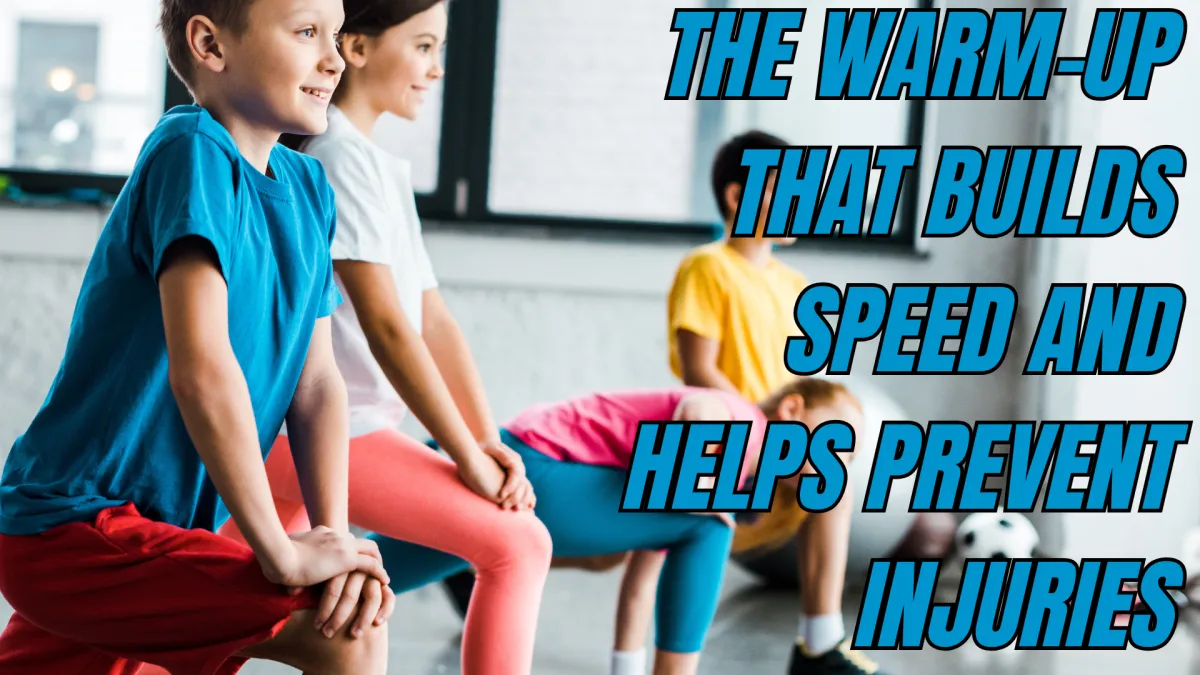
The Warm-Up That Builds Speed and Helps Prevent Injuries
Most youth athletes warm up the same way:
A few jogs.
A few stretches.
Then straight into chaos.
That’s not a warm-up. That’s just arriving.
A real warm-up does two jobs:
Prepares the body for practice
Trains the athletic qualities that reduce injury risk and improve performance
This is where neuromuscular training matters.
What “neuromuscular training” actually means
It’s not a fancy phrase.
It’s training that teaches athletes how to:
land and decelerate with control
stabilize knees/hips/ankles under speed
coordinate the body under changing demands
handle force better when tired
What the research supports (in plain language)
Systematic reviews and meta-analyses in youth sport show neuromuscular training programs reduce lower-extremity injury risk.
And more recent meta-analytic work continues to support meaningful reductions in lower-extremity injury risk in adolescent and young athletes.
This isn’t “extra.” This is high-value training.
Here’s why I like this as a coach:
The same warm-up that helps reduce injury risk also tends to improve the stuff parents care about:
moving better
cutting with control
jumping/landing cleaner
building the brakes that protect knees/ankles/hips
A simple 10-minute warm-up template (youth-friendly)
Use this before practice 2–4 days per week.
1) Raise (2 minutes)
easy jog + backpedal + side shuffle
smooth, not exhausting
2) Activate & mobilize (2 minutes)
walking lunges (controlled)
glute bridge hold x 20 seconds
ankle rocks x 10/side
3) Land & decelerate (3 minutes)
snap-down to athletic position x 5
pogo jumps x 10–15
stick landing (small jump, freeze) x 5
4) Change of direction (3 minutes)
5–10–5 shuffle at 70–80%
short sprint → hard stop → return
control first, speed later
The biggest mistake: doing speed work without brakes
A lot of kids can “go.”
They can sprint, jump, cut.
But they don’t know how to absorb force.
That’s where non-contact injuries happen:
cutting without control
landing sloppy
decelerating with collapsing knees/hips/ankles
Teach the brakes early.
Bottom line
If you want your athlete to get faster, move better, and stay healthier:
don’t skip the warm-up
don’t treat it like filler
build a simple system and repeat it
Want help with a plan that fits your child’s sport and needs? Check out our Youth Training program.
References (MLA)
Emery, Carolyn A., et al. “Neuromuscular Training Injury Prevention Strategies in Youth Sport: A Systematic Review and Meta-Analysis.” British Journal of Sports Medicine, vol. 49, no. 13, 2015, pp. 865–870, doi:10.1136/bjsports-2015-094639.
Li, Yuda, and Weidong Zhu. “The Preventive Effects of Neuromuscular Training on Lower Extremity Sports Injuries in Adolescent and Young Athletes: A Systematic Review and Meta-Analysis.” The Knee, vol. 56, Oct. 2025, pp. 373–385, doi:10.1016/j.knee.2025.06.008.


Are you Ready to become
sTRONG - FIT - cONFIDENT?
Click the Button To Start Your Journey Today!!


