
WEIGHT LOSS & FITNESS BLOG
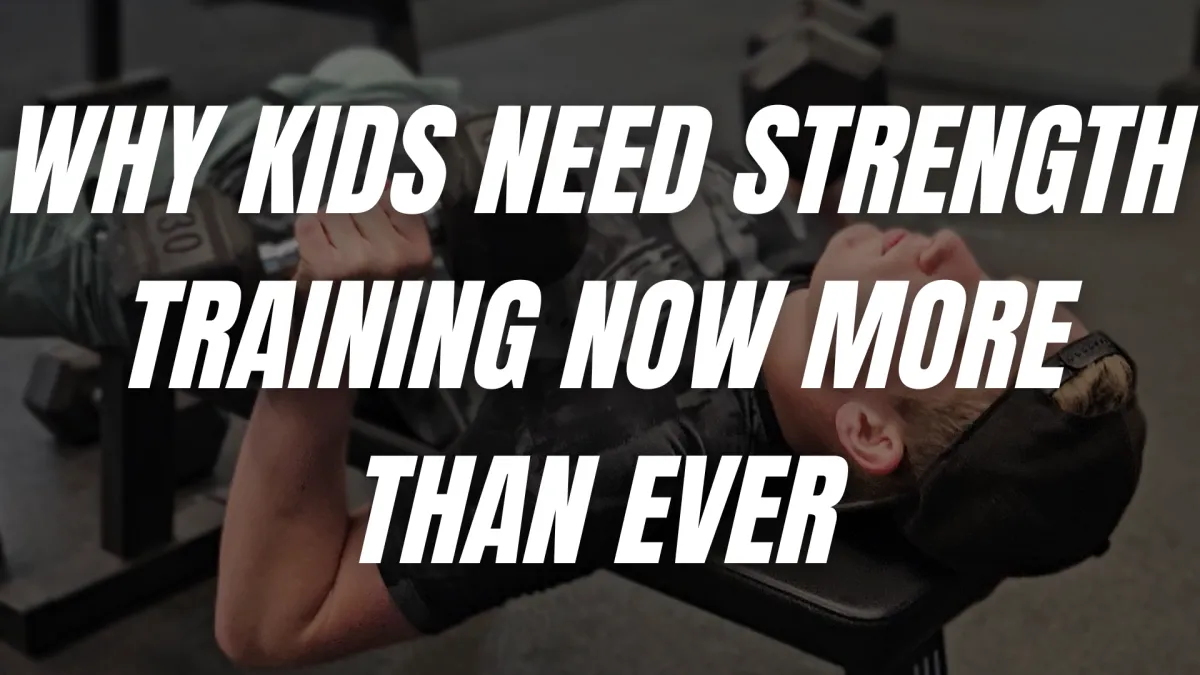
Why Kids Need Strength Training Now More Than Ever
Strength training is one of the most beneficial activities kids can do for their health, confidence, and athletic development — yet many parents still wonder if it’s safe or appropriate. Research shows that not only is strength training safe for kids, but kids today actually need it more than ever. This guide breaks down the science behind youth strength training and explains why it plays a crucial role in injury prevention, coordination, performance, and long-term development.
One of the most common questions parents ask is:
“Is strength training safe for kids?”
Here’s the truth backed by decades of research:
Strength training is not only safe — it’s one of the BEST things kids can do for confidence, coordination, and long-term athletic development.
Kids today need strength training more than ever.
Here’s why.
1. Kids Are Less Active Than Ever Before
Kids today move less than any generation in history.
Screens replaced outdoor play.
Sports seasons replaced unstructured movement.
Sitting replaced movement.
Studies show kids today are weaker, less coordinated, and less active than they were 20 years ago (1).
Strength training fills the gaps natural play used to build, helping kids:
Build muscle
Improve posture
Increase coordination
Strengthen bones
Improve overall fitness
It gives them the foundation their lifestyles no longer provide.
2. Strength Training Helps Prevent Injuries — Especially in Sports
The #1 reason kids miss games today isn’t broken bones — it’s overuse injuries.
Why?
Because kids are playing more structured sports… but with weak foundations.
Strength training helps prevent injuries by improving:
Tendon strength
Joint stability
Balance
Motor control
Symmetry between limbs
Research shows supervised strength training can reduce youth sports injuries by up to 50% (2).
3. Strength Training Does NOT Stunt Growth — That’s a Myth
This myth died decades ago.
Strength training does NOT stunt growth.
It does NOT damage growth plates.
It is VERY safe when supervised.
In fact, strength training increases bone density during crucial growth years (3).
The real risk?
Being inactive or training unsupervised with bad technique.
4. Strength Training Builds Confidence Faster Than Almost Anything Else
Every week at BFP, we watch kids come in shy, uncertain, or low-confidence… and they walk out standing taller.
Strength training gives kids:
A sense of accomplishment
Visible progress
Better body awareness
A belief in their own abilities
Mental resilience
These benefits go far beyond sports.
5. Strength Training Makes Kids Better at Every Sport
Strength is the foundation of athleticism.
Strength training improves:
Speed
Agility
Jumping ability
Acceleration
Stability
Power
Coordination
Even kids who don’t consider themselves “athletes” benefit massively.
6. Strength Training Builds Habits That Carry Into Adulthood
Kids who learn to strength train learn:
Discipline
Effort
How to move well
How to train safely
How to take care of their health
These habits shape their future — physically, mentally, and emotionally.
FINAL THOUGHT: Kids Don’t Need More Sports. They Need More Strength.
More practices won’t fix a weak foundation.
More games won’t improve coordination.
More tournaments won’t prevent injuries.
Strength training will.
If your child wants to feel more confident, get stronger, or play their sport at a higher level, this is the place to start.
Ready to help your child build strength this winter?
👉 Book a Youth Assessment and we’ll create a plan just for them. https://bfpnc.com/youth-training
📚 REFERENCES
Physical Activity Trends in Youth — CDC, 2020
Faigenbaum, A. et al. “Youth Resistance Training: Position Statement of the NSCA.” 2009.
British Journal of Sports Medicine: “Resistance Training Effects on Pediatric Bone Health”
Myer, G. et al. “Neuromuscular Training Reduces Injury in Youth Athletes.” Journal of Athletic Training, 2005.



Are you Ready to become
sTRONG - FIT - cONFIDENT?
Click the Button To Start Your Journey Today!!


