WEIGHT LOSS & FITNESS BLOG
How to Train Teens Safely in the Gym (Without Guessing)
If your teen wants to start lifting weights, that’s a good thing.
But I know what most parents are thinking: Is it safe? Will they get hurt? What if they start doing random workouts they saw on TikTok? How heavy is too heavy? Do they need a coach, or can they just figure it out?
All fair questions.
Here’s the truth: teens can absolutely lift weights safely and benefit a ton from it — if the program is coached, structured, and age-appropriate.
The problem isn’t strength training.
The problem is unsupervised training, poor technique, and no real plan.
So if you want your teen to train safely, here’s what actually matters (and what doesn’t).
First: “Strength Training” Is Not the Same as “Maxing Out”
When most parents hear “weights,” they picture:
teens maxing out on bench press
loading a barbell until it’s too heavy to control
testing 1-rep maxes
lifting with ego because their friends are watching
That’s not what youth strength training should be.
The American Academy of Pediatrics (AAP) makes it clear that resistance training is more than weightlifting, and when it’s properly supervised and taught, it can be safe and effective for kids and adolescents.
A good youth program is about:
learning movement skills
building strength gradually
improving control and coordination
getting stronger for sports and life
Not chasing numbers.
Why Teen Strength Training Is Worth It
When it’s coached properly, teen strength training can help with:
Better performance (speed, jumping, power, strength)
Injury prevention (stronger muscles + better control)
Bone health and overall fitness
Confidence and body awareness (this is huge, and parents underestimate it)
It also helps teens meet national activity recommendations.
The CDC recommends youth (ages 6–17) get 60 minutes of physical activity per day, including muscle-strengthening activities at least 3 days per week.
So strength training isn’t some weird extra thing.
It’s part of what healthy youth activity should include.
The 7 Rules for Safe Teen Training (Parents — Save This)
If your teen is going to lift weights, these rules will keep them safe and help them actually get results.
1) Technique Comes Before Load. Always.
Your teen should be able to move well with their bodyweight and light loads first.
They need basic control in:
squatting
hinging (deadlift pattern)
lunging
pushing
pulling
bracing their core
If they can’t do those movements with control, adding weight doesn’t “build strength.”
It builds bad habits.
2) Supervision Matters More Than Equipment
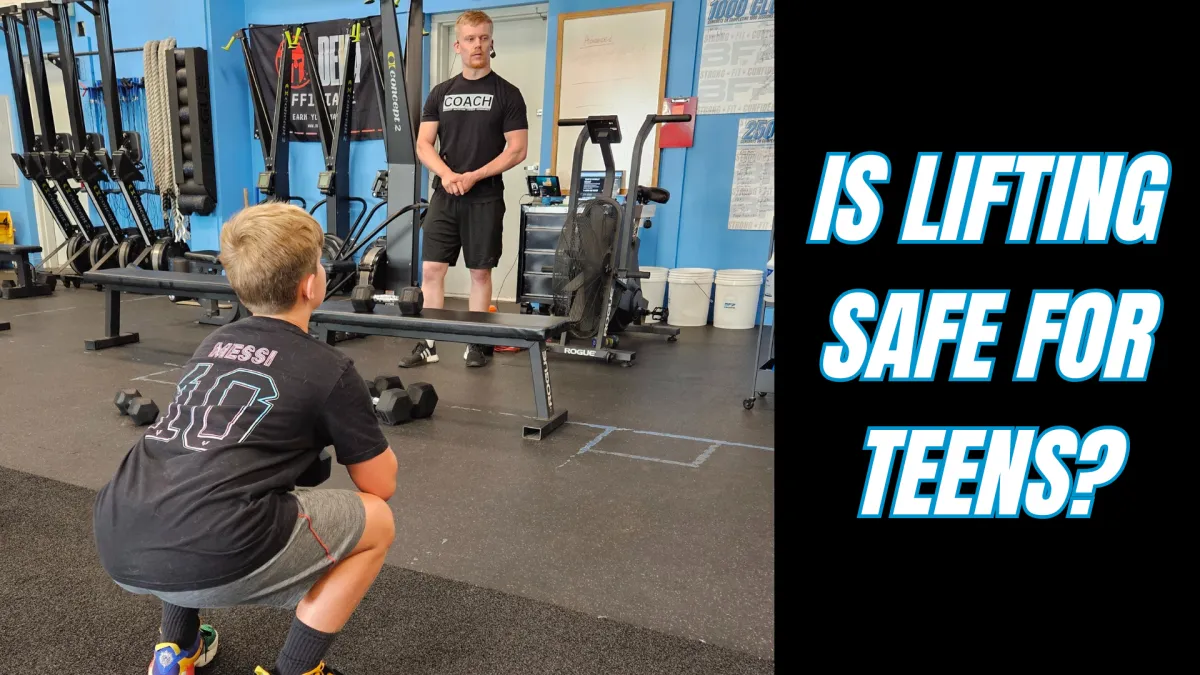
A teen lifting weights isn’t dangerous.
A teen lifting weights unsupervised is what gets risky.
The AAP consistently emphasizes that youth resistance training should be properly supervised and taught by qualified professionals.
Coaching matters because it prevents:
sloppy reps
poor movement patterns
lifting through pain
and the classic “let’s see how heavy you can go” mentality
3) No 1-Rep Max Testing
Your teen doesn’t need to test the heaviest weight they can lift one time.
They can build strength safely with:
moderate weight
controlled reps
good technique
gradual progression
The NSCA supports youth resistance training when programs are designed appropriately and supervised, focusing on progression and technique rather than maximal lifting.
4) Full-Body Training Beats “Bro Splits”
A lot of teens copy workouts like:
chest day
arm day
abs day
leg day (sometimes)
The issue isn’t that those workouts are evil.
The issue is they usually skip what matters most:
hips
hamstrings
upper back
core stability
athletic mechanics
A solid teen program should be full-body 2–3 days per week.
It’s balanced, more efficient, and it carries over better to sports.
5) Teen Training Should Include Athletic Skills
This is the part most “regular gym workouts” miss.
Strength training should include:
jumping and landing mechanics
sprint mechanics
deceleration (learning how to slow down safely)
change of direction drills
Because most sports injuries happen when kids can’t control their body at high speed.
Strength helps.
Strength + mechanics helps more.
6) Progression Should Be Slow and Boring (That’s the Secret)
Teens want fast results.
But safe training is built on boring basics:
repeat movements
build technique
add small progress over time
Progress should look like:
better form
smoother reps
more control
slightly more weight or reps
higher confidence
Not “how much can you lift this week?”
7) Recovery Is Part of the Program
If your teen is:
sleeping 5–6 hours a night
eating like a bird
not drinking water
playing multiple sports with no recovery
They’re going to be tired, sore, and more likely to get hurt.
Training is the stimulus.
Recovery is where adaptation happens.
This is where parents can help a lot by supporting:
✅ sleep
✅ meals with protein
✅ hydration
✅ and rest when needed
What a Safe Teen Gym Session Actually Looks Like
Here’s an example of what teen training should look like in real life:
Warm-Up (8–10 min)
Movement prep, light cardio, mobility, and activation.
Athletic Block (8–12 min)
Jumps/landings, sprints, agility drills.
Strength Block (20–25 min)
A squat or lunge, hinge, push, pull, and carry.
Cool Down (3–5 min)
Breathing, stretching, recovery.
Not complicated.
But very intentional.
The Biggest Mistake Parents Make
The biggest mistake isn’t letting teens lift weights.
The biggest mistake is saying:
“Sure, go to the gym… just be careful.”
Because without a plan, “be careful” turns into:
random workouts
inconsistent training
poor form
ego lifting
and wasted time
If you want your teen to train safely, they need structure and coaching, not just access to a gym.
The Bottom Line
Teens can lift weights safely.
And when it’s done right, it’s one of the best things they can do for:
sports performance
injury prevention
confidence
and long-term health
The goal isn’t to lift heavy.
The goal is to build a strong foundation that makes your teen harder to break.
Want to make sure your teen is training safely and the right way?
Book a Youth No Sweat Intro — a free, pressure-free consult where we’ll:
talk about your teen’s sport and goals
assess movement basics (squat, hinge, push, pull, run/jump)
recommend the best next step (youth personal training, small group training, or sport performance)
👉 Schedule at bfpnc.com (fill out the contact form)