WEIGHT LOSS & FITNESS BLOG
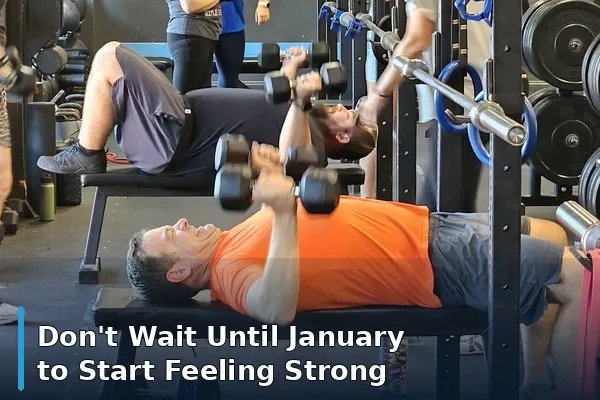
Don't Wait Until January to Start Feeling Strong
The calendar doesn't have to change before you do. If you've been thinking about getting stronger, November's a solid time to get rolling. You don't need a picture perfect schedule, a new gym fit, or motivation that lasts all winter. You need a plan that fits the week you've got right now.
That first step matters because a lot of people wait until life calms down, and the holidays rarely do. You can start with a modest plan now, learn the movements, and build confidence before January arrives. And if you already exercise, this can be a good time to keep your routine steady instead of trying to make every week perfect.
Start with a repeatable amount
For most of us, two coached strength sessions a week can be a solid place to start. Each session can cover a few basic movement patterns: squat or step, hinge, push, pull, and carry. We want to practice, see what's manageable, and build gradually. A systematic review and network meta-analysis found that several resistance-training approaches improved strength and muscle growth compared with no training. So there's more than one workable way to begin. That’s great news! To put it simply, there’s several ways to skin a cat and all them are better than nothing at all.
A strength session doesn't need to be complicated to be worthwhile. You might practice a squat or step, a push, a pull, a hip hinge, and a carry, then repeat those movements with a little more control or confidence over time. Your coach can adjust the exercise, load, or range so it fits your starting point. And when you're new, learning the setup and moving with control are real progress too.
Make a holiday plan, not a holiday promise
Look at the next seven days and choose two times you can protect. If travel or family plans interrupt your routine, keep a short backup session ready: a few controlled sets of squats, push-ups, and band rows can help you keep the habit alive when travelling. And when the week gets crowded, scaling a workout is more useful than treating one missed day as a reason to quit.
Before the week starts, put those sessions on your calendar like any other appointment. Then decide what you'll do if one gets bumped. Maybe you can move it to another day, take a short walk, or do a few comfortable bodyweight movements at home. Having a backup makes it easier to keep your promise to yourself, even when the original plan changes.
A good first step
Write down two training times, then decide where you'll go and who'll help you get started. A coach can help you choose the right variations and starting loads. At BFP, we start with a conversation about your goals and how you move, then build from there. You don't have to get in shape before you start training. Starting is how you begin.
Give yourself a few weeks to settle into the routine, and notice more than the number on a scale. Maybe getting up from a chair feels easier, carrying groceries takes less effort, or you feel more comfortable walking into the gym. Those changes count, and they can help you see that you're building a habit as well as strength.
References